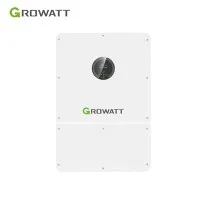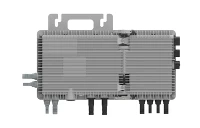
Canada has lifted its ban on dumping duties on crystalline silicon photovoltaic modules and solar products made in China, putting an end to this trade practice that has lasted for over ten years. The Canadian International Trade Tribunal announced on September 17 that it has revoked its previous orders following a review, while the Canada Border Services Agency stopped charging these duties since September 18. The order by the tribunal means that these duties are now abolished, with some of them previously reaching as high as 154.4%.
For now, all Chinese products entering Canada will be charged a 0 % most favorite nation tariff. The tribunal revoked orders on crystalline silicon modules and photovoltaic products as well as thin film products made via amorphous silicon, cadmium telluride, or copper indium gallium selenide. All the modules that produce not more than 100 watts of power were excluded from the initial ban.
A Procedural Termination, Not a Finding of No Dumping
It is important to note that the CITT's decision was not based on a substantive finding that Chinese solar dumping or subsidization had ceased. Rather, it was a procedural termination triggered by a lack of domestic-industry support for continuing the measures. Under Canada's Special Import Measures Act (SIMA), the tribunal can terminate an expiry review at any point if it finds the review lacks support from domestic producers-inferred when producers fail to file notices of participation or do not participate substantially. In this case, the only domestic producer that responded to the questionnaire, Heliene, had already stopped manufacturing comparable products in Canada.
Why Canada Removed the Duties
The core driver behind the decision is the near-total disappearance of Canada's domestic solar manufacturing capacity. Heliene and other Canadian producers effectively ceased manufacturing solar modules in Canada by the end of 2022, and more than 95% of off-grid solar modules in the country now rely on imports. With no domestic industry left to protect, continuing the duties served no protective purpose and only raised costs for Canadian solar project developers.
Canada's broader clean energy ambitions also played a role. The federal government unveiled a large-scale clean energy strategy in May 2026 aimed at doubling the national power grid by 2050, with plans to spend CAD 1 trillion on hydropower, nuclear, wind and solar generation. Removing the duties allows Canada to import cheaper solar products and lower the cost of developing solar power projects.
The ruling comes in line with the relaxing of trade differences between China and Canada, which started in January 2026. Canada's government announced at that time it would replace its outright 100% duty on imports of Chinese electric vehicles with the annual import quota of 49,000 vehicles, subject to the 6.1% most-favored-nation tariff rate. Ottawa announced then that it would also no longer impose duties on other Chinese solar products and on semiconductors.
Limited Market Impact in the Short Term
Despite the headline significance, the practical impact on China's solar exports to Canada is expected to be modest. Canada's solar market remains small by global standards. The country's cumulative installed solar capacity stood at approximately 6.58 GW in 2025, with forecasts projecting growth to 10.25 GW by 2031. Annual new additions have been in the hundreds of megawatts, and much of the market remains off-grid.
In the first half of 2026, Canada imported an estimated 0.5621 GW of the solar products covered by the data, with China supplying approximately 0.0564 GW-about 10.04% of the total. Malaysia and Indonesia together accounted for roughly two-thirds of imports, with shares of 37.82% and 28.54% respectively. China ranked third among suppliers, behind established Southeast Asian sources.
For the full year of 2025, China's solar module exports to Canada amounted to approximately 119 MW, valued at about US$10.96 million. By comparison, China's total solar module exports reached 249.8 GW in 2025, meaning Canada accounted for less than 0.05% of China's global solar exports.
"Canada's decision is positive, but it is not currently a key market, and the overall impact is limited," several Chinese solar companies told Jiemian News. One analyst noted that China's annual solar exports to Canada are less than what the Netherlands imports in a single month.
Supply Chain Switching Costs Remain a Barrier
Even with duties removed, Chinese manufacturers face practical hurdles in winning Canadian orders. Re-entering the Canadian market requires completing certification procedures, negotiating new commercial contracts and rebuilding local distribution channels. Meanwhile, Southeast Asian supply chains have been operating duty-free for years and have established strong customer relationships.
SMM analysis suggests that the immediate effect is more likely to be a shift in sourcing than a sudden expansion in end-market demand. For manufacturers with both Chinese and overseas production facilities, some Canadian orders may be reallocated between production sites depending on which offers the most competitive combination of efficiency, manufacturing cost and delivery terms.
Certification Requirements Unchanged
The removal of anti-dumping duties does not affect Canada's mandatory electrical certification requirements. Every solar module installed in Canada must carry a certification mark from a Standards Council of Canada (SCC) accredited body, such as CSA, cUL, ULC or cETLus. A US UL listing alone is not sufficient for Canadian installation. Additionally, Canada's anti-dumping duties on Chinese aluminum extrusions-the material used in solar panel frames and racking-remain in effect and were renewed on Oct. 1, 2025.
A Rare Reversal Amid Global Trade Barriers
Canada's decision stands in contrast to the broader global trend of rising trade barriers in the solar sector. The United States continues to impose Section 301 tariffs of 50% or more on Chinese-origin solar cells and wafers, and has recently imposed a 15% global tariff on polysilicon and derivative solar products. The European Union has also been considering new anti-dumping and countervailing duty applications against solar glass suppliers. Industry analysts note that average duty rates across the solar supply chain increased ninefold between 2023 and 2024.
Canada's move is best understood as a pragmatic response to its own energy needs rather than a signal of a broader retreat from solar trade protectionism. With no domestic manufacturing to protect and ambitious clean energy targets to meet, Canada has chosen to prioritize cost-effective solar deployment over trade remedies. For Chinese manufacturers, the door is now open-but the room behind it remains small.