
CÁDIZ, Spain – In a pioneering move that promises to reshape the future of urban energy retrofitting, a 1960s residential building in the historic heart of Cádiz has transformed its mandatory safety railings into a fully operational solar power plant. This innovative renovation converts the building's ordinary balconies into active energy-generating surfaces without altering its architectural identity.
Saint-Gobain Glassolutions, along with Onyx Solar (the world's foremost integrated designer/installer of photovoltaic glass) and Comenza (a leading manufacturer of railings and enclosure systems), has developed a project called "Conecta Solar." The project was created as part of the total renovation of the building located at Plaza de la Hispanidad next to the old Comes bus station, and has won one of the NAN Architecture Awards for 2024 in the Electricity, Lighting, Home Automation, Photovoltaics, and Electric Usage Control Installation category.
Originally built in 1966, the building had all of the typical energy deficiencies associated with buildings from that era, and it had no thermal insulation on its façades, was poorly constructed with inefficient carpentry, and had many thermal bridges prior to the renovation. The new system integrates thin photovoltaic cells into the balcony railing glass, allowing the railing to generate electrical energy and appear to be clear.
According to estimates, the new photovoltaic railings will generate an estimated 15,000 kWh of renewable electrical energy per year by 2026. This equates to more than the total annual electrical consumption of four average-sized households in Spain. Most of the energy generated will be used by the building in order to reduce its electrical usage from the grid and to enhance its overall energy balance and carbon footprint.
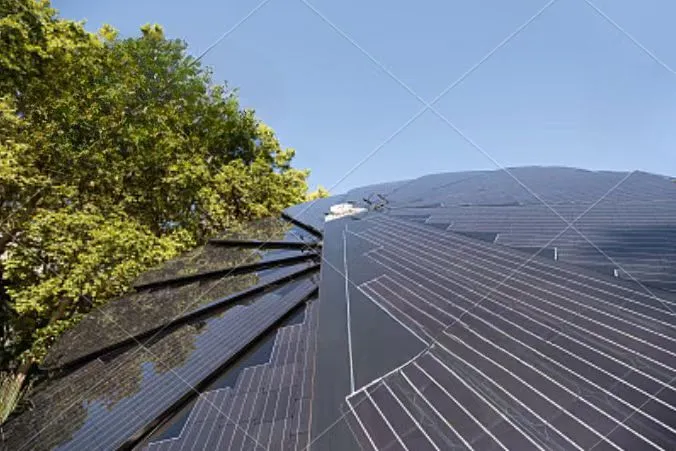

According to estimates, the 2026-renewed photovoltaic railings will produce approximately 15,000 kilowatt-hours of renewable electrical energy annually. This output is equivalent to the yearly electricity consumption of more than four average Spanish households. The generated power is directly consumed within the building, reducing its demand from the grid and improving its overall energy and emissions balance.
The success of the Conecta Solar project highlights a major breakthrough in Building-Integrated Photovoltaics, or BIPV. Unlike traditional solar panels, which are often mounted on rooftops or as external add-ons, BIPV systems are multifunctional devices designed and manufactured to be fully integrated into the building envelope. The photovoltaic glass used in Cádiz serves both as a protective barrier and an energy-generating system, maintaining the historic aesthetic while improving sustainability.
Fernando Muñoz, of Orba Arquitectura & Rehabilitación, explained the challenge and the solution in a statement: "In a building constructed without energy efficiency criteria, we sought a solution that would provide renewable energy without altering the architecture or adding complexity to the renovation. Photovoltaic railings allowed us to turn a mandatory safety element into an active electrical generation surface." He added that the contribution of renewable energy had a direct and measurable impact on the building's Energy Efficiency Certificate, improving the overall balance of consumption and emissions.
The fusion of renewable energy and old buildings is a topic of increasing relevance in Europe. Researchers at the Universidad Politécnica de Madrid recently published a study analyzing 41 case studies of old and historically significant buildings where BIPV systems were integrated during renovation processes. The results concluded that the integration of photovoltaics not only reduces grid energy consumption but also demonstrates that preserving architectural heritage can coexist with sustainable energy solutions. "The fact that a building is old, historic, or even protected should not automatically exclude the possibility of integrating solar energy," said UPM researcher Lorenzo Olivieri.


One of the goals of the European funded LIFE BIPV project is prove the practicality of incorporating solar cells into building envelopes through demonstrations throughout Europe in Germany and Spain to test for the differing climates of both countries. Additionally, technology service company enacted by Tecnalia (in Spain) has developed the first commercially available prefabricated modular balcony that will connect to renewable energy, be ventilated and controlled for smart energy access.
Technologically, the Cádiz project will make a tremendous contribution toward transforming the common urban setting. According to the project promoters and builders: "Building in a city like Cádiz, where light, balconies and exterior walls are part of the urban design category of the city, makes this project even more relevant." They further stated it is more than just a technical solution; it is a completely different way to re-evaluate residences; buildings that still meet their initial purpose while producing renewable energy for their customer's own use.
As more municipalities in Spain and across Europe seek to accelerate the energy rehabilitation of their aging residential stock, the success of this innovative rehabilitation in the Andalusian capital will likely serve as a replicable model. The active, energy-generating skin of this renovated 1960s building offers a blueprint for a sustainable urban future where aesthetics and advanced technology work in harmony.