


Hebei Mutian Solar Energy Technology Development Co., Ltd. is one of the most reliable manufacturers and suppliers of 3 kw solar system off grid in China, also supports customized service. Welcome to buy advanced 3 kw solar system off grid in stock from our factory.
overview
The 3 Kw Solar System Off Grid consists of solar photovoltaic modules, inverters, lithium batteries, PV solar panel mounts, MC4 connectors, and other components. It is based on the photovoltaic effect and its operational principles are conducted mostly through the process of converting light energy into electric energy.These systems are stand-alone power systems designed to serve specific structures and can function without grid electricity. They are quite dependable. Additionally, when solar power is unavailable, a solar battery can be recharged from an AC system. In the absence of sunlight, or when the power grid is out of supply, the stored battery power can be utilized to support the AC load through the inverter.
In recent years, photovoltaic power generation has experienced massive transformation alongside improvements in key technologies and standards. Innovation, driven by advances in science and technology, has significantly contributed to the development of photovoltaic power generation, supported by upstream industries. Research and innovation in key technologies have provided a core driving force for solar power generation.
Products Advantages
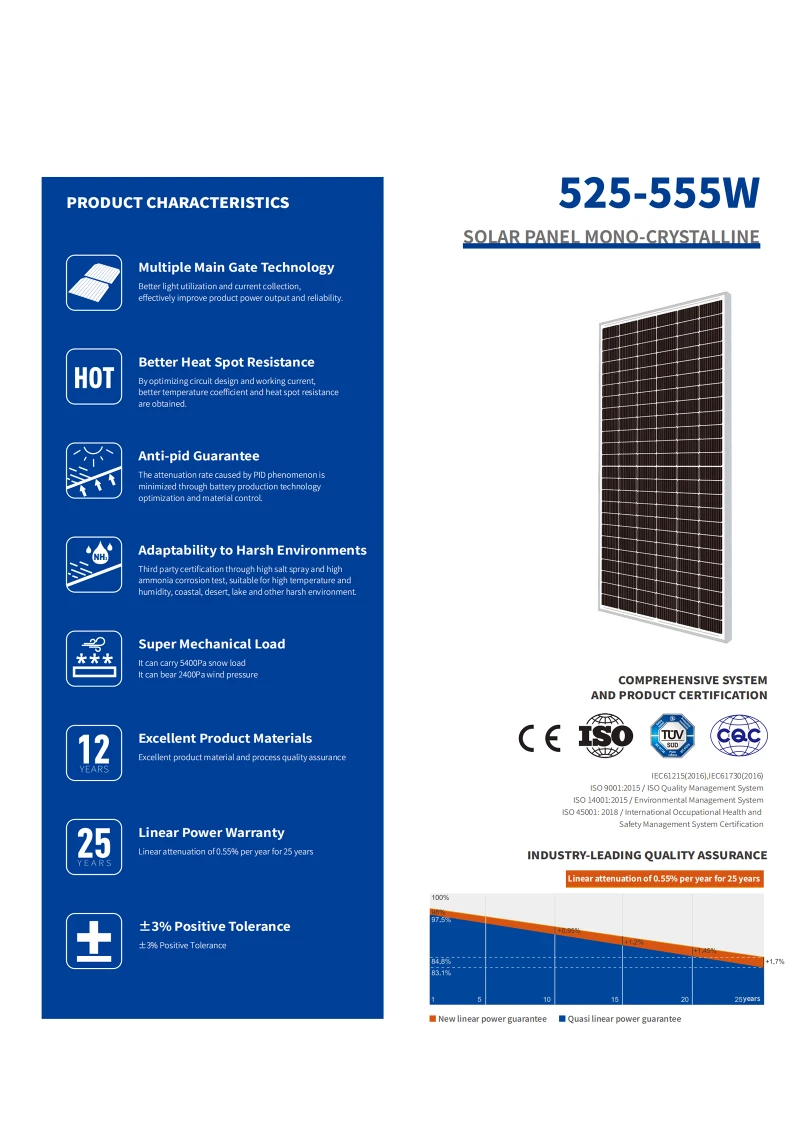
1. Environmental conservation and renewable resources: The system relies on renewable energy sources, reducing dependence on fossil fuels and greenhouse gas emissions, thereby aiding in environmental conservation.
2. Low cost: Construction costs for off-grid power systems have been decreasing annually. Especially in rural areas, constructing off-grid power generation systems may be more economical than extending traditional electrical grids.
It can operate independently without relying on the power grid and are generally used in remote areas, powerless regions, islands, communication base stations, and streetlights. Their application scenarios are diverse:
Convert solar energy into electrical energy when sunlight is available, supplying power to the load through the off-grid inverter or charging the battery.
In the absence of photovoltaics, batteries can also be charged via the grid.
When there is no sunlight or grid power, battery power can be used to supply AC loads through the inverter.

Products Description
| 3 Kw Solar System Off Grid | ||
|
Item |
Specification |
Qty |
|
Solar Panel |
550WP |
6pcs |
|
Solar Inverter |
3KW/48v /100A |
1pcs |
|
Lithium battery |
100AH/51.2v(5KWH) |
1pcs |
|
Cable |
4.0 |
50m |
|
25.0 |
5m |
|
|
PV Bracket |
3KW |
1set |
|
MC4 |
PV Matched |
20pcs |
|
PV Combiner Box |
3KW |
1set |
|
Installation tool |
PV Matched |
1set |
|
Installation design |
1set |
|
|
Packing |
Wooden |
1 set |
Features:
1. The system is completely self-sufficient, carefully designed to operate solely on renewable energy sources. They do not require a primary electrical grid connection and utilize solar energy during the day.
2. Solar energy stored in batteries enables the system to work seamlessly day and night. However, if solar batteries are not used, no energy can be harnessed on gloomy, rainy days.
3. Photovoltaic connections are not required.
550W Panel Characteristics

|
Solar Module Type |
BCT-10M-144-525W |
BCT-10M-144-530W |
BCT-10M-144-535W |
BCT-10M-144-540W |
BCT-10M-144-545W |
BCT-10M-144-550W |
BCT-10M-144-555W |
|
Maximum Power at STC(Pmax)[W] |
525 |
530 |
535 |
540 |
545 |
550 |
555 |
|
Open-Circuit Voltage(Voc)[V] |
49.12 |
49.32 |
49.52 |
49.69 |
49.90 |
50.10 |
50.20 |
|
Optimum Operating Voltage(Vmp)[V] |
41.26 |
41.41 |
41.55 |
41.72 |
41.90 |
42.10 |
42.22 |
|
Short-Circuit Curren(t Isc)[A] |
13.63 |
13.70 |
13.78 |
13.86 |
13.90 |
13.95 |
14.03 |
|
Optimum Operating Curren(t Imp)[A] |
12.73 |
12.81 |
12.88 |
12.95 |
13.02 |
13.07 |
13.15 |
|
Component Efficiency[%] |
20.3 |
20.5 |
20.7 |
20.9 |
21 |
21.5 |
21.5 |
3KW Inverter
|
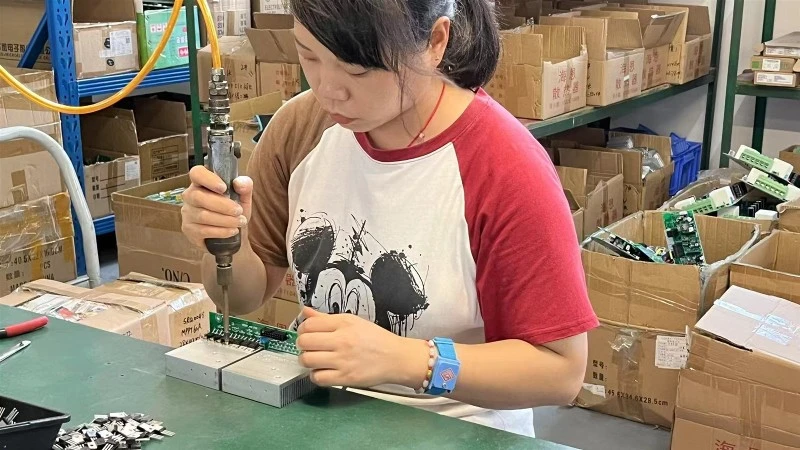
Output Power: 3kW Inverter type: Low frequency pure sine wave Output voltage: :220V/230V ±5% single phase Output voltage: 50Hz/60Hz±1% Waveform(Pure sine wave): THD<2% Working model: Solar power first,if battery low switch to city power Protection: DC under voltage/overload/short circuit/peak surge. Warranty:5 years. |
Lithium-ion battery
Lithium-ion battery: This type of battery has an installation that occupies less space because it can be mounted directly on walls. The lithium-ion battery system has a power capacity of 200A, 51.2 volts, and can charge its batteries much better than lead-acid batteries.
|
No. |
Item |
General Parameter |
Remark |
|
|
1 |
Combination method |
16S2P |
||
|
2 |
Rated Capacity |
Typical |
100Ah |
Standard discharge after Standard charge (package) |
|
Minimum |
95Ah |
|||
|
3 |
Factory Voltage |
52V-54V(70-90%) |
Mean Operation Voltage |
|
|
4 |
Voltage at end of Discharge |
40-42.5V |
Discharge Cut-off Voltage |
|
|
5 |
Charging Voltage |
58.4-60V |
||
|
6 |
Internal Impedance |
≤60mΩ |
Internal resistance measured at AC 1KHZ after 50% charge
The measure must uses the new batteries that within one week after shipment and cycles less than 5 times |
|
|
7 |
Standard charge |
Constant Current:20A Constant Voltage see No.5 0.02CA cut-off |
Charge time : Approx 6 h |
|
|
Limiting current |
|
|||
|
8 |
Standard discharge |
Constant current:100A end voltage see NO.4 |
||
|
9 |
Maximum Continuous Charge Current |
50A |
T≥10ºC |
|
|
10 |
Maximum Continuous Discharge Current |
120A |
T≥10ºC |
|
|
11 |
Operation Temperature Range |
Charge : 0~45℃ |
60±25%R.H. Bare Cell |
|
|
Discharge: -20~55℃ |
||||
|
12 |
Storage Temperature Range |
Less than 12 months : -10~35℃ |
60±25%R.H. at the shipment state |
|
|
less than 3 months: -10~45℃ |
||||
|
Less than 7 day : -20~65℃ |
||||
|
13 |
Dimensions |
610*490*160mm |
Include Bracket |
|
|
14 |
Weight |
Approx :65.5kg |
||


|
1 |
|
PV Bracket |
Aluminum Alloy materials Wind load:55m/s Snow load:1.5kn/m2 |
|
2 |
|
Installation tool |
Photovoltaic MC4 Matched |
|
3 |
|
PV Combiner Box |
Applicable for outdoor PV systems Max Current: 120A Waterproof terminals |
|
4 |
|
Cable |
TUV and UL standard, with specification suitable for solar system; |
|
5 |
|
Packing |
Wooden case with pallet. |


FAQ
Q: How to Pick the Best Spot for Your Solar Panels?
Figuring out where to put your solar panels is actually the most important step if you want them to work really well, be safe, and last for decades. It's way more involved than just finding some empty roof space! Let's break down what really matters:
1. Getting Enough Sunlight (This is Critical!):
◦ Direction & Angle Matter: We want your panels to catch as much sun as possible, all year round. In our neck of the woods (Northern Hemisphere), south-facing is generally your best bet. But getting it just right needs a little thought about true south versus magnetic south and your roof's shape. Setting the tilt angle close to your latitude (which your installer will tweak slightly for summer/winter) gives you the best bang for your buck year-long. Facing slightly southeast or southwest? That still works great too, even if you give up a tiny bit of the perfect output.
◦ Shade is Your Enemy: Seriously, even a little shade – from your chimney, a vent, that old satellite dish, trees (don't forget how big they'll get!), or your neighbor's roof – can tank the output of a whole bunch of panels because they're all connected. Your installer will bust out some cool tools, like solar pathfinders or fancy software, to map out shade patterns across the entire year. They'll especially focus on midday sun and the tough winter months when the sun is low (around December 21st is key). For peak performance, dodging any major shade spots isn't just nice-to-have, it's a must.
2. Is Your Roof Really Up for It?
◦ Roof Type & Condition: We've gotta match the mounting system perfectly to your specific roof material – whether it's shingles, tile, metal, or flat. Way more crucial: your roof structure needs to be solid. No leaks, no major rot, no creaky bits. Someone's actually gotta check this out on-site. For older homes, they might even need a real structural engineer to be sure your roof can handle the extra weight (panels + frame) plus wind and snow, not just now, but for the next 25+ years.
◦ Can It Hold the Weight? Think about the panels themselves, the frame holding them up, and any snow that piles up. That whole load needs to be well within what your roof's bones (the trusses or rafters) can handle. This is all based on local building codes and engineering specs – no winging it.
3. Practical Stuff: Getting Up There & Keeping Them Happy
◦ Getting to Them Safely: The installation crew needs safe, easy access to do their job properly. But it doesn't stop there! Later on, folks will need to get up there for inspections, maybe fixing something, or cleaning – safe access paths matter then too. Any good installer plans for this right from the start, keeping everyone safe.
◦ Room to Breathe: We don't just slap panels flat on the roof. They get mounted a few inches up to let air flow underneath. Why? Keeping them cooler means they work better and last longer. Too much heat saps power and ages them faster.
4. Keeping the Wires Short & Connection Simple:
◦ Shorter Wires = Less Waste: Ideally, you want the panels fairly close to your main electrical panel (or wherever the power gets used). Shorter wires running DC power from the panels to the inverter and then shorter AC wires to your main hookup mean less energy lost along the way and lower material costs.
◦ Connecting to the Grid: While the panels are on your roof, we still need to plug the inverter back into your house's electrical system / the grid meter. The simpler this physical connection is, the smoother things go. Your installer will talk to the utility company to figure out the exact spot to connect.
Location Wrap-Up: Sure, a south-facing roof slope (up here) with hardly any year-round shade is the absolute dream setup. But nailing the structural check, ensuring safe access, and planning the wiring route are just as crucial. That's why the pros do a thorough site survey first, covering every single one of these points.

Hot Tags: 3 kw solar system off grid, China 3 kw solar system off grid manufacturers, suppliers, factory, Solar Generator Kit With Ac Output, solar off grid remote monitoring, off grid solar orientation, solar off grid package, Complete Solar Off Grid Power System, off grid solar service


